

TL;DR: AI is commoditizing content. Everyone has the same tools, so everyone sounds the same. Learn my Human-in-the-Loop system for training your AI to sound like you, not like everyone else.
Is it me, or does it feel like LinkedIn is starting to sound like one big echo chamber?
I’ve been noticing this pattern for months now, and I don’t think I’m alone in seeing it. In fact, I was just having a conversation with Brian Covey about this last week. Here’s what I’m seeing: similar posts with predictable frameworks and familiar hooks.
Let me be clear: the fact that anyone is trying to learn how to use AI to create content is important. It’s how we learn and get better. But here’s what I’m seeing as more of us lean into these tools. A pattern is emerging where posts are starting to blend together, and it feels predictable and boring. I think it’s what happens when we’re all using the same tools in the same way without realizing we’re creating the very similar outputs.
There’s zero shame in this, by the way. As thought leaders and professionals building our brands, we get better by noticing what is and isn’t working, then making adjustments. This isn’t a rant or a call-out post. This is more of a “can we all do better?” kind of conversation.
Because here’s the thing. If you’re in mortgage, real estate, or financial services, you already work in a commoditized industry where rates are rates and loans are loans. The process is standardized and nearly identical no matter where someone goes. So the differentiator has always been you—your story, your lived experience, the way you explain things, the clients you’ve helped through impossible situations.
That’s what builds trust in trust-poor industries. That’s what makes someone choose you over the loan officer down the street with the same rates. Your personal brand isn’t about logos and colors—it’s about what people say about you when you’re not in the room.
But if AI-generated content starts making all of us sound the same, we lose that differentiator, and I don’t think any of us want that.
So here’s the question: How do we use AI as a tool without losing what makes us distinct?
Be the Lighthouse
There’s a picture that’s been stuck in my head since I was a kid, and I think it might be the answer to this question.
My dad was a marriage and family counselor, and he welcomed clients into his office daily. Above his desk, there was this massive picture you couldn’t miss—a ginormous lighthouse with waves crashing all around it. Standing on the edge at the top was a tiny man, just a speck against this massive structure.
I stared at that picture a thousand times growing up, and I finally understand why it matters right now.
My dad wasn’t just a counselor. He was someone people came to when their marriage was falling apart, their kids were in crisis, and their life completely overwhelming. They’d sit on his couch and see that picture of the tiny man standing on this massive lighthouse with waves crashing everywhere.
The lighthouse was more than office decor. It was a message for every client passing through his door. The message was subtle but clear: in a sea of chaos, you need a source of truth, a beacon of hope, something steady and dependable.
That’s what your personal brand needs to be, especially now. Because here’s what’s happening in your market. Your clients are bombarded with information and don’t know how to make sense of it. They’re getting conflicting headlines and confusing information everywhere they look. Home prices are up, no wait they’re down. Rates are high but maybe they’ll drop. Should I buy now or should I wait?
It’s chaotic, and you have the opportunity to be the lighthouse by starting with your story.
Here’s How You Do It: Human-in-the-Loop
Let me teach you a framework I use called Human-in-the-Loop. It’s four simple steps for approaching AI-generated content, and it’s not complicated, but most people skip step one and wonder why their content feels off.
Let me walk you through it.
Step 1: Start With an Original Idea
Here’s where most people get it wrong. They open ChatGPT (or whatever AI tool they prefer) first, type something like “Write me a LinkedIn post about rates,” and ChatGPT spits out generic content that sounds like everyone else.
Don’t do that. For the love, don’t start there. Start with you first.
What conversation did you have with a client this week? What objection did you hear? What file went sideways? What lesson did your kids teach you? What did you hear at church that made you think? Your whole life is story material, and everything you do can be crafted into authentic messaging.
Start there. Open AI after you have the idea, not before.
Here’s an example of what that looks like in practice: “I had a client today who was terrified about rates. Here’s what they said, here’s what I told them, here’s what clicked for them.” That’s your starting point, not a prompt asking AI to generate something from scratch. Your lived experience is the raw material, and AI is the assistant that helps you shape it.
Step 2: Brain Dump to AI
Once you have your idea, brain dump it. Voice note, text, type; it doesn’t matter. Just dump the story, the thought, the lightbulb moment, even if it feels small.
Here’s what that might look like: “I had a client today who was convinced they couldn’t buy because rates were too high. I pulled up their numbers and showed them what waiting would actually cost them, and their face changed. They got it.”
Dump it all. This is where AI actually shines, because it helps bring in perspectives you hadn’t considered and turn your messy brain dump into something structured.
But you gave it the raw material. Your story, your experience, your voice. This is the difference between AI-assisted and AI-generated content. You’re asking AI to help shape what you already know.
Step 3: Train Your AI
Alright, this is the step that separates good content from AI slop, and most people skip this. That’s why their content sounds like everyone else.
If you don’t train your AI, it will default to generic. It’ll give you em dashes and triple adjectives and overused frameworks because it was trained on millions of posts that all sound the same.
So here’s what you do. You feed it who you are, who you help, why you’re the best at what you do, how long you’ve been doing it. Feed it your stories and your voice samples. Give it everything it needs to write as if it’s filtering through your brand brain instead of shooting darts in the dark.
In my Brand Builder framework, this is exactly what we do. We create your AI brain, which includes your voice, your messaging, your story, so every time you create content, it sounds like something you’d say in real life. Words that work, not generic templates.
And honestly, this makes a huge difference. This is one way to stop commoditizing your content, because AI is a commodity that everyone has access to. But your lived experience, your unique story, the way you explain things, the clients you’ve helped? That’s your competitive advantage.
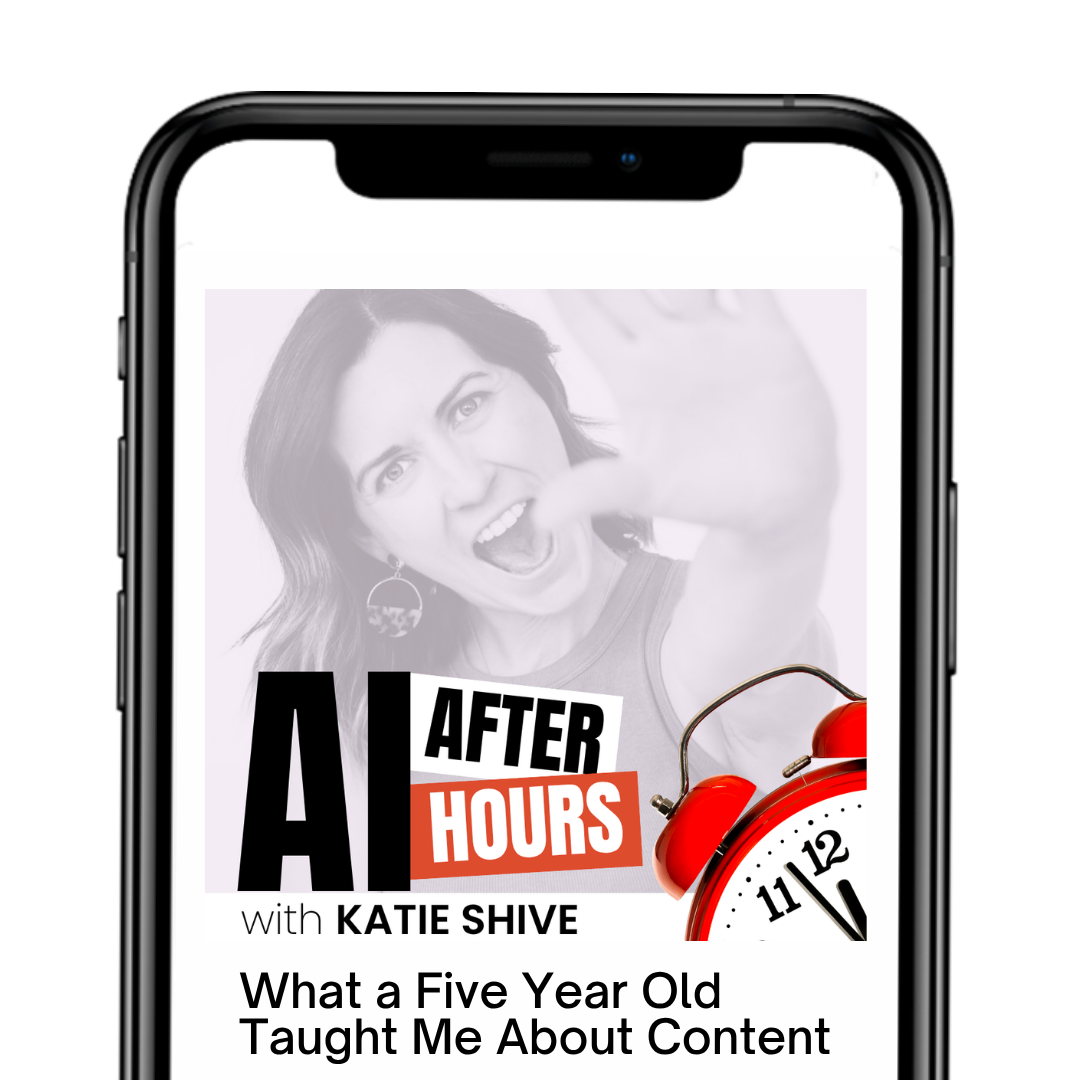
That’s what I teach in my AI After Hours podcast and through my AI-powered brand systems. Story work meets AI strategy. Authentic messaging that scales without losing your voice. Your story is the one thing AI can’t copy.
Step 4: Show Up Consistently
Here’s the last piece: a lighthouse doesn’t flicker on and off randomly; it’s dependable.
Your personal brand can’t be sporadic content here and there whenever you feel inspired. That doesn’t build trust, and that doesn’t build authority. Be the expert technician you are and show up consistently.
Post weekly, send your newsletter, and record your videos. Be the beacon of hope in your market. Because in a sea of AI slop and conflicting information and overwhelmed buyers, people are looking for someone steady. Someone they can trust, someone who shows up. And that should be you.
You Become the Lighthouse
Finally, here’s what happens when you do this. Your content comes across as an original thought filtered through AI efficiency. And you become the lighthouse, a source of truth and hope and calm in the storm.
Whether you’re in mortgage, real estate, financial services, whatever. That’s how you win in a commoditized space. Not by having access to better tools, but by having a better story. By training your AI to amplify your voice. By showing up consistently as the expert you already are.
This is what I mean by high trust plus high visibility equals revenue. You build trust through authentic storytelling, through showing up with content that serves instead of just sells. You build visibility through consistent showing up, through being the person your market can count on.
Together, that’s how you drive real business results. Your personal brand becomes what people say about you when you’re not in the room. And when they ask AI “Who should I work with?” you’re the one with the answer, because you didn’t just copy and paste generic content. You showed up as yourself.
Here’s My Challenge to You
Next time you open AI, start with Human-in-the-Loop. Have the idea first, brain dump second, train your AI third, show up consistently fourth.
And if you don’t know how to train your AI, or you’re sitting there thinking “Katie, I don’t even know where to start with building my AI brain,” that’s exactly what Brand Builder does.
We uncover your story, we build your voice, we train your AI so it sounds like you instead of everyone else. DM me “BRAND BUILDER” on LinkedIn or visit katieshive.com. Let’s make sure when people read your content, they hear you and not generic AI output.
As Coach Bill Hart says, “Always deliver more value than cost.” Be the lighthouse. Stand out. Give people hope.
And if you want to keep learning about AI strategy and personal branding, subscribe to my AI After Hours podcast. New episodes every week with practical frameworks you can implement right away.




https://shorturl.fm/AqJmH